


NEWS XTRA
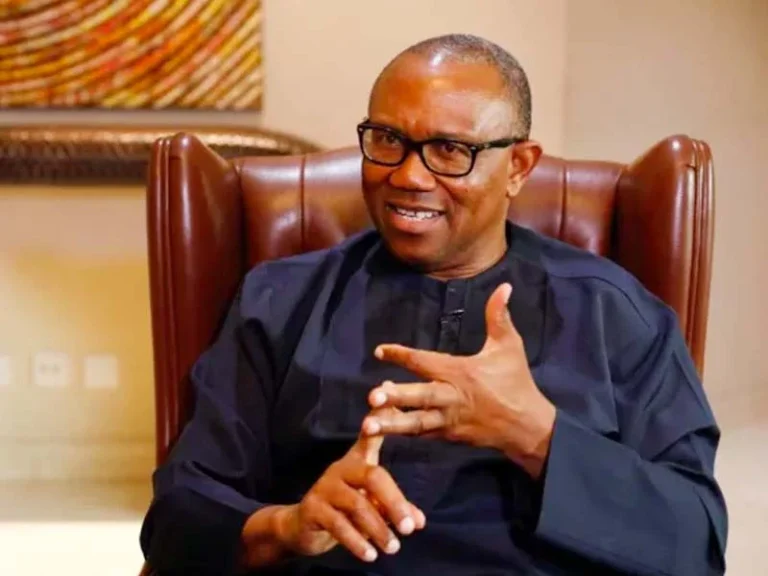
ANAMBRA DEBT: NO QUARREL WITH SOLUDO, SAYS PETER OBI
Former Anambra State Governor and presidential candidate of the Nigeria Democratic Congress, Peter Obi, has said he has no disagreement with his successor, Governor Chukwuma Soludo, amid the ongoing dispute over the state’s financial obligations.
Obi made the clarification on Friday while responding to recent public discussions about debts and other liabilities associated with projects implemented during his tenure as governor.
The former governor, who said he had been silent in recent days because he was mourning his late elder brother and friend, Chief Okey Ezeibe, also said he would not seek the governorship of any state again, even if the Constitution was amended.
He appealed to governors to allow presidential candidates and other political contestants to campaign freely in their states, regardless of their political affiliations.
Obi said voters should ultimately be allowed to decide which candidates they wanted to represent them, while political actors should focus on the challenges confronting Nigerians.
The former governor’s comments came amid a dispute between his camp and the Anambra State Government over external borrowing linked to projects undertaken during his administration.
The state government has said eight external borrowing facilities associated with projects during Obi’s tenure had a combined contracted value of $123.77m, with $92.35m outstanding as of June 30, 2026.
Obi, however, rejected the description of the facilities as debts personally incurred by him or conventional commercial loans obtained by his administration.
He said the facilities were primarily World Bank and International Fund for Agricultural Development development programmes negotiated by the Federal Government and accessed by participating states through subsidiary arrangements.
According to Obi, the figures being cited should be separated into the amounts approved, the amounts actually drawn and the balances outstanding, rather than being combined and described as loans left by his administration.
He maintained that he did not personally approach any financial institution to borrow money or issue bonds on behalf of Anambra State during his eight years in office.
Obi also referred to former Debt Management Office Director-General Abraham Nwankwo, saying Nwankwo had publicly stated at his farewell ceremony that Obi was the only state governor who had not approached the DMO for approval to obtain a loan facility.
He further maintained that his administration left no unpaid salaries, gratuities or pensions, and no verified debts owed to contractors or suppliers whose work had been completed and certified.
Obi said the development-financing arrangements should instead be assessed based on when they were approved, became effective, were drawn down and were repaid.
He also questioned the $123.77m figure cited by the Anambra Government by comparing it with DMO figures for the state’s external debt at different periods.
According to Obi, DMO records showed Anambra’s external debt at about $18m when he assumed office in March 2006, about $30m when he left office in March 2014 and approximately $45.15m in December 2014.
He therefore questioned how the state government arrived at the figure of $123.77m as debt inherited from his administration, arguing that the figures required further clarification.
The Anambra State Government has maintained that the eight external borrowings were contracted during Obi’s tenure and that subsequent administrations have continued to service the obligations.
The government has also alleged that Obi left unpaid salary, gratuity and pension obligations involving retired teachers and Water Corporation staff, claims the former governor has rejected.
The disagreement over Anambra’s financial position at the end of Obi’s tenure has intensified in recent weeks, with both sides presenting different interpretations of the state’s debt records and repayment obligations.