


BREAKING NEWS
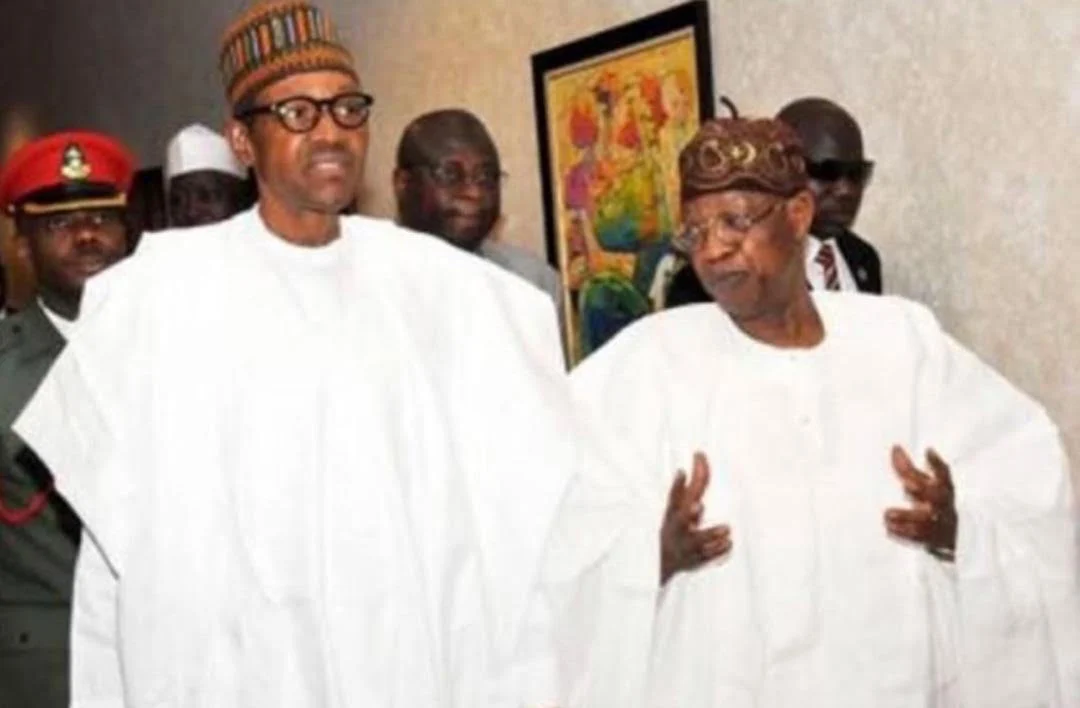
BUHARI’S INTEGRITY, COMPASSION DEFINED HIS LEADERSHIP — LAI MOHAMMED
Former Minister of Information and Culture, Lai Mohammed, has paid tribute to former President Muhammadu Buhari, describing him as a rare leader whose greatest legacy was not the numerous public offices he occupied but his unwavering integrity, patriotism, humility and absolute trust in those who served under him.
Speaking in Abuja during an event commemorating the first anniversary of Buhari’s passing, the former minister said the late president distinguished himself by leading with honesty, compassion and confidence in his subordinates throughout his decades of public service.
According to a statement issued on Tuesday by the Head of Strategic Communication in the Lai Mohammed Media Office, Nnamdi Atupulazi, the former minister reflected on his nearly eight years as spokesman for the Buhari administration, saying the late president consistently demonstrated uncommon confidence in him, even during sensitive national assignments.
Mohammed said, “President Buhari’s life was defined not merely by the many positions he occupied but by the values he represented. Beyond his impressive military and political credentials were the qualities that truly distinguished him: his unwavering patriotism, unquestionable integrity, disarming humility, honesty and, above all, his profound humanity.
“It was one of the greatest privileges of my life to have worked so closely with him. He trusted those who served him, cared deeply about their welfare and led by personal example. Those are qualities that will remain his enduring legacy.”
He described Buhari as one of the few Nigerians who traversed virtually every level of national leadership, beginning with his military career as a platoon commander and rising through several command positions to become General Officer Commanding before serving as military governor, Federal Commissioner, Chairman of the Nigerian National Petroleum Corporation, member of the Supreme Military Council, military Head of State, Executive Chairman of the Petroleum Trust Fund and eventually a two-term democratically elected president.
The former minister said Buhari’s confidence in his aides was demonstrated on several occasions, including the approval of a high-risk media tour of communities liberated from Boko Haram insurgents in Borno State shortly after assuming office in 2015.
According to Mohammed, despite being away in South Africa for an international summit and receiving no prior briefing on the operation, Buhari immediately approved the mission after the then Minister of Defence insisted that only the Commander-in-Chief could authorise the deployment of military personnel and aircraft.
“The President approved the operation immediately without hesitation. Journalists were flown aboard a C-130 military aircraft from Abuja to Maiduguri before proceeding under heavy military escort and air cover to Bama, once declared by Boko Haram as the headquarters of its self-proclaimed caliphate. That level of confidence from a Commander-in-Chief remains one of the greatest demonstrations of trust any subordinate can receive,” he said.
Mohammed also recalled how Buhari handled allegations contained in a petition submitted against him while he served in government.
He said although the late president ordered a discreet investigation in line with due process, Buhari privately made it clear that he did not believe the allegations.
“He insisted that the allegations should be investigated because due process demanded it, but he also made it known from the beginning that he did not believe them. At the end of the investigation, I was completely exonerated,” Mohammed said.
The former minister further narrated how Buhari publicly defended him during a meeting of the Federal Executive Council after another cabinet member questioned whether the administration’s achievements were receiving adequate publicity.
“The President told members of the Council that he had personally watched my international media engagements, which made me miss that particular meeting, and affirmed that I was effectively communicating the achievements of the administration to audiences across the world,” he said.
Mohammed described Buhari as a committed nationalist who remained steadfast in his belief that Nigeria’s unity was non-negotiable.
Recalling Buhari’s role during the Nigerian Civil War, he quoted the former president’s declaration after assuming office as military Head of State in January 1984:
“This generation of Nigerians, and indeed future generations, have no other country than Nigeria. We shall remain here and salvage it together.”
According to Mohammed, Buhari remained faithful to that philosophy throughout his years in democratic office while confronting the country’s security and economic challenges.
Contrary to the widespread perception of Buhari as a stern military officer, Mohammed said the former president possessed a gentle disposition, humility and a lively sense of humour.
He recounted an occasion when Buhari called him while he was in Lagos and politely asked whether he could “do me a favour” by representing him at an event at the Nigerian Institute of International Affairs instead of issuing a direct presidential order.
He also remembered political strategy meetings in Kaduna ahead of the 2015 general elections during which Buhari jokingly teased him over his routine Monday and Thursday fasting.
“He would ask me, ‘How many people have you killed that you are doing all these marathon fasts?’ Everyone in the room would burst into laughter. That was the side of him many Nigerians never saw,” Mohammed said.
The former minister disclosed that Buhari once explained why critics had nicknamed him “Baba Go-Slow,” saying experience had taught him the importance of patience, fairness and careful decision-making after the lessons he learnt as military Head of State.
He also cited an account by former Head of State, General Yakubu Gowon, who revealed in his memoir that Buhari quietly assisted him financially years after he left office when he encountered difficulties paying his children’s school fees.
Mohammed said his admiration for Buhari predated their working relationship, adding that the former president agreed to write the foreword to his 2012 book, Witness to History, and was the first guest to arrive at the Lagos launch despite waiting for more than an hour before the event began.
He added that their friendship continued after Buhari left office through regular visits to the former president’s residences in Daura and Kaduna.
“President Buhari’s enduring legacy is integrity, patriotism, humility, compassion and selfless service. Those values will continue to inspire generations of Nigerians. I pray that Almighty Allah forgives his shortcomings, grants him Aljannah Firdaus, comforts his family and continues to bless Nigeria with peace, unity and prosperity,” Mohammed said.
Buhari died in London on July 13, 2025, at the age of 82 after a prolonged illness.
His remains were flown back to Nigeria and buried in his hometown of Daura, Katsina State, in accordance with Islamic rites. President Bola Tinubu, senior government officials, foreign dignitaries and thousands of mourners attended the state burial.
One year after his passing, debates over his legacy continue, with supporters praising his anti-corruption stance and personal integrity, while critics assess his administration’s handling of the economy, insecurity and governance.