


BUSINESS
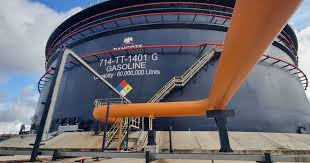
DANGOTE REFINERY RECEIVES SECOND CRUDE SHIPMENT FROM GHANA AS MAINTENANCE CUTS INTAKE
The Dangote Petroleum Refinery has received its second shipment of crude oil from Ghana, marking a significant shift in its sourcing strategy as the refinery adjusts operations and prepares for major
maintenance work.
Industry data indicates that the latest cargo, which contains Ghana’s Sankofa crude grade, arrived in November. This is only the second time the refinery has sourced crude from Ghana. This development highlights Dangote's increasing reliance on West African and domestic crude grades as operations continue to stabilize.
According to energy analytics firm Kpler, the average crude deliveries to the refinery were around 380,000 barrels per day between September and November, which is approximately 30% lower than the refinery's peak intake during July and August. Kpler noted that November shipments were primarily made up of Nigerian crude grades, including Bonny Light, Amenam, Forcados, Utapate, and Qua Iboe, while the Ghanaian cargo was the only non-Nigerian component.
The decrease in crude intake is attributed to ongoing equipment challenges and planned shutdowns. The refinery's Residue Fluid Catalytic Cracking (RFCC) unit began a two-month shutdown on December 4 due to persistent regenerator-related issues. A one-week outage for the Crude Distillation Unit (CDU) is scheduled for late January.
These outages have resulted in a significant decline in crude purchases from Europe, particularly from the North Sea and Mediterranean regions. Consequently, the refinery is relying more heavily on Nigerian and nearby West African suppliers, which can provide faster and more flexible deliveries during maintenance periods.
The reduced crude intake is already impacting Nigeria’s downstream market. With the RFCC offline until February, petrol production at the refinery is expected to decrease from recent levels of 100,000–130,000 barrels per day to about 80,000 barrels per day, thereby increasing Nigeria’s dependence on imported fuel.
Kpler reports that Nigeria’s petrol imports nearly doubled in November, reaching around 300,000 barrels per day, the highest level in over a year. This surge coincided with the refinery's decline in output, forcing the country to rely more on European suppliers.
Analysts expect refinery operations to improve once maintenance activities are completed, with projections suggesting that crude runs could exceed 500,000 barrels per day by April 2026.