


MILITARY & SECURITY
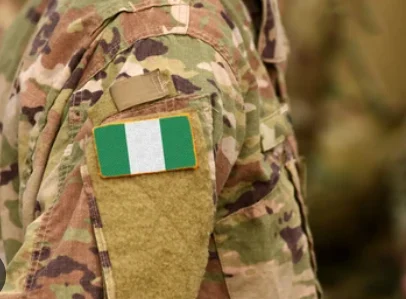
EX-GENERAL: SOLDIERS BUYING KITS NOT SIGN OF MILITARY FAILURE
Retired Major General Henry Ayoola has dismissed claims that Nigerian soldiers purchasing personal military equipment reflects a systemic failure within the armed forces.
He made the remarks on Channels Television’s Morning Brief, responding to a viral controversy triggered by a former soldier, Rotimi Olamilekan, popularly known as “Soja Boi,” who alleged that troops are forced to buy their own uniforms, boots, and protective gear despite low salaries.
The allegations had sparked public debate over welfare conditions in the military, though the Nigerian Army has since rejected the claims, insisting that all personnel are provided with standard-issue equipment before deployment.
Ayoola backed the Army’s position, stating that soldiers sometimes choose to enhance their gear privately, which he said should not be interpreted as institutional failure.
According to him, there is a defined baseline known as a “full-service matching order,” which ensures every soldier receives minimum required kit.
He acknowledged that operational constraints can affect logistics but maintained that commanders manage resources as best the possible under such conditions.
“When equipment is limited, it is rationalised,” he said, adding that troops often adapt to field realities.
Beyond the controversy, the retired general also argued that Nigeria’s insecurity problem is structural and cannot be addressed purely through military solutions.
He described the crisis as a broader political and ideological challenge, stressing the need for a clearer definition of the country’s security threats.
He further noted increased use of surveillance tools such as drones in military operations to reduce ambush risks and improve battlefield awareness.
Ayoola concluded that failure to clearly identify and define adversaries continues to hinder effective security responses in the country.