


BUSINESS
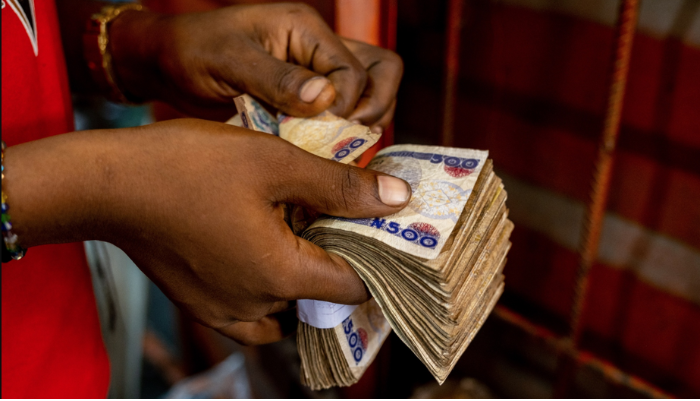
FEDERAL GOVERNMENT BEGINS SOCIAL REGISTER REVALIDATION, APPROVES CASH TRANSFERS FOR 2.3 MILLION HOUSEHOLDS
FG Revalidates Social Register, Approves Payments for 2.3 Million Households
The Federal Government has commenced the revalidation of the National Social Register (NSR) as part of efforts to improve the conditional cash transfer programme targeted at cushioning the effects of recent economic reforms.
The Federal Government has confirmed and cleared 2.3 million households for payment under its renewed cash transfer initiative, according to the Director General of the National Identity Management Commission (NIMC), Abisoye Coker-Odusote.
Speaking at a press briefing at the NIMC headquarters in Abuja, Coker-Odusote explained that the ongoing revalidation is part of the National Social Safety Nets Project, aimed at ensuring that only eligible Nigerians benefit from government palliatives.
“The Federal Government is currently revalidating the national social register under the National Social Safety Net to enable the disbursement of payments,” she said. “As of Tuesday, we have successfully revalidated 2.3 million individuals and will soon begin disbursements. Our role is to verify identities, and we are collaborating with other agencies to ensure the funds reach the rightful beneficiaries.”
She stressed the critical importance of accurate identity verification to prevent misallocation of resources.
“We don’t want to pay people who no longer exist. That’s why identity verification is crucial—to ensure we have a reliable, verifiable source of truth and credentials that confirm a person’s identity in real time,” she added.
The revalidation effort comes amid growing concerns from the World Bank over the slow rollout of the programme, which was launched in 2023 following the removal of fuel subsidies and the unification of the foreign exchange market.
In its latest Nigeria Development Update titled “Building Momentum for Inclusive Growth,” the World Bank revealed that only 5.6 million households—representing 37 percent of the target 15 million—had received any cash transfers two years after the launch.
The World Bank had approved an $800 million loan to support the social protection scheme, with $530 million disbursed as of April 30, 2025.
According to a recent report, only 5.6 million households—approximately 37 percent of the target—have received at least one installment of direct cash transfers. The report noted that further expansion of the programme hinges on the biometric verification of at least one adult per household using a foundational digital identity.
It also emphasized the need to intensify efforts to provide immediate support to the most vulnerable and economically at-risk households.
In a separate interview on Arise TV, Tope Fasua, Special Adviser to President Bola Tinubu on Economic Affairs, acknowledged the slow rollout but attributed it to the rigorous biometric verification process, which he said is essential for maintaining transparency and preventing fraud.
“The World Bank is very meticulous in how it disburses funds, and while that ensures accountability, some might argue it also introduces bottlenecks,” he explained.
“The reason why only 37 percent of households have been reached is because of the need to have biometric confirmation. The truth is, the finance ministry has records of disbursements and the indigent beneficiaries. The only issue is scaling it up, but it is better to be careful than sorry. Going forward, the process will be tidied up even better.”
Fasua called for public patience, stressing that the integrity of the process must take precedence over speed, especially when public funds meant for vulnerable citizens are involved.