


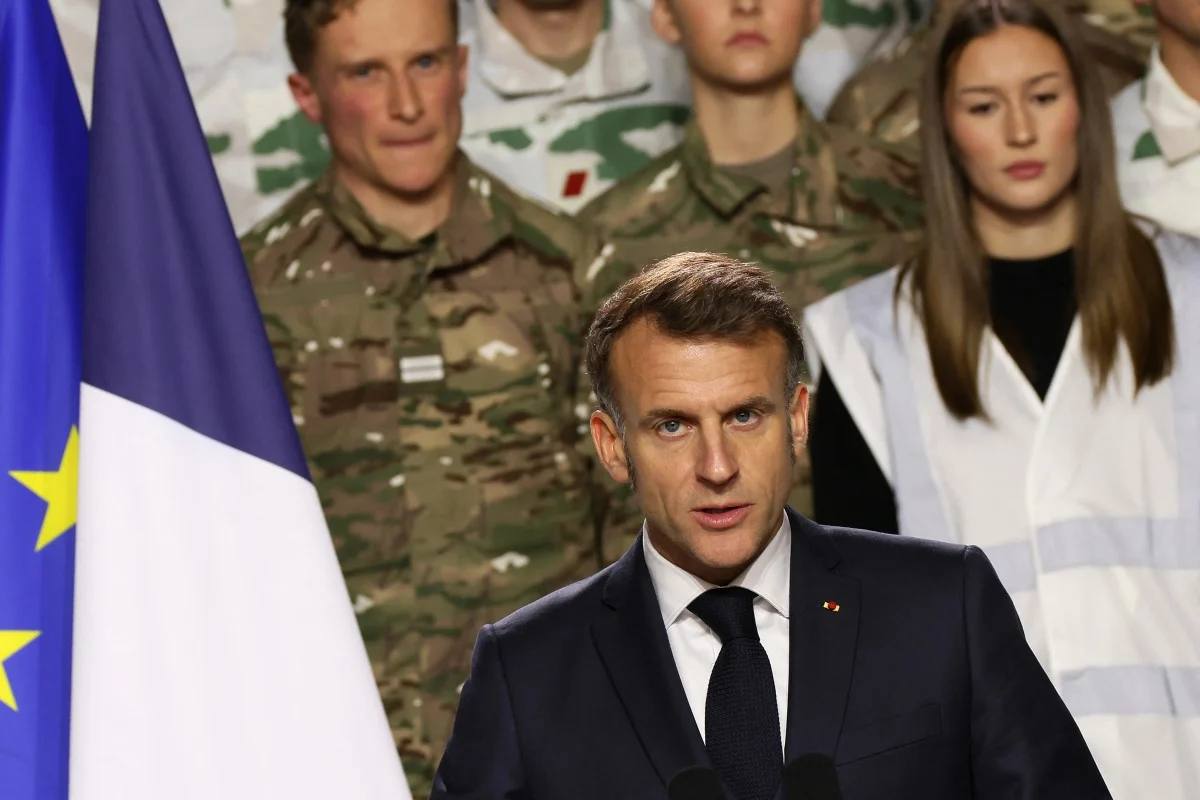
GREENLAND: MACRON URGES EUROPE TO INVEST IN STRATEGIC SECTORS
French President Emmanuel Macron has urged European countries to significantly increase investment in strategic sectors, warning that the continent risks being “swept aside” by growing competition from the United States and China.
Macron made the call in an interview published on Tuesday with several European publications, including Le Monde, The Economist, The Financial Times, and Germany’s Süddeutsche Zeitung.
Ahead of an upcoming European Union meeting focused on competitiveness, the French leader stressed the need to simplify and deepen the EU’s single market while diversifying trade partnerships to strengthen Europe’s economic resilience.
“We are currently in a phase I would call a ‘Greenland moment’,” Macron said, referring to recent geopolitical tensions involving the United States.
He cautioned that threats and pressure from Washington should not be taken lightly, noting that although US President Donald Trump recently reversed his position on annexing Greenland and imposing tariffs on European countries, the underlying risks remain.
“There are threats and intimidation. And then, suddenly, Washington backs down. And we think it’s over. But don’t believe it for a second,” Macron said, adding that sectors such as pharmaceuticals and digital technology remain under constant threat.
Macron argued that Europe must not give in to overt pressure or pursue weak compromises, warning that such approaches could deepen the continent’s strategic dependence.
“When there is blatant aggression… we must not bow down or try to reach a settlement,” he said.
According to the French president, the European Union needs around €1.2 trillion ($1.4 trillion) in public and private investment annually to remain competitive. He said the funding should focus on green and digital technologies, as well as defence and security.
Macron also renewed France’s long-standing call for joint European borrowing, advocating the issuance of future-oriented Eurobonds to finance these investments—an idea that has faced resistance from some EU member states.
“Now is the time to launch a common borrowing capacity for these future expenditures,” he said.