


NEWS XTRA
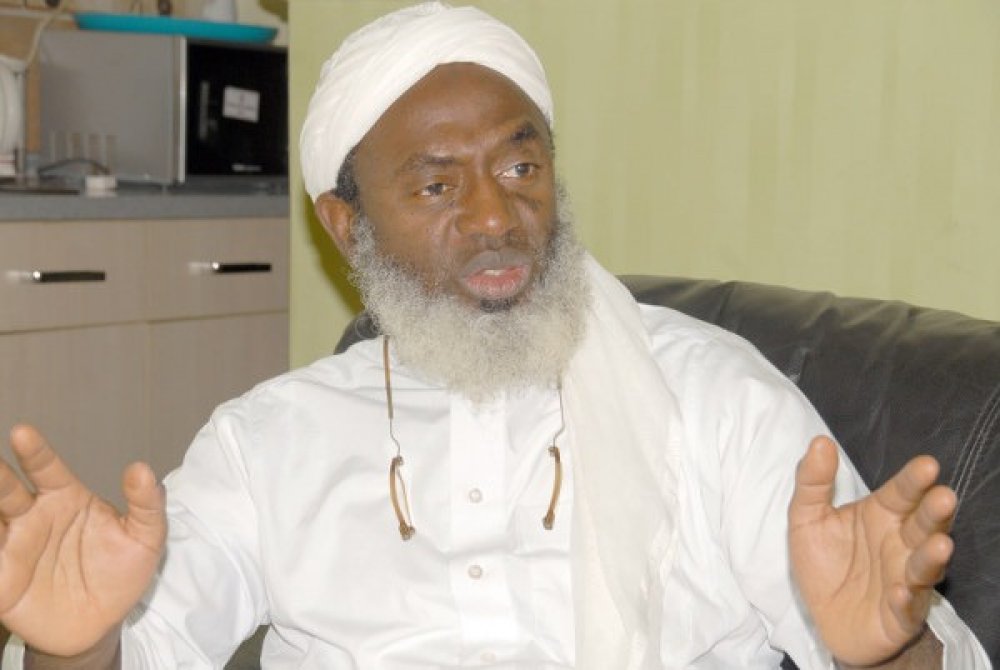
GUMI’S SHOCKING REVELATION SPARKS RENEWED DEBATE ON NATIONAL SECURITY
Many Nigerians have expressed shock following recent comments by controversial Kaduna-based Islamic cleric, Abubakar Gumi, who stated during a television interview that the Federal Government possesses detailed knowledge of terrorists’ identities and locations across the country.
For some citizens, the cleric’s remarks merely reinforce long-standing suspicions that authorities may not be doing enough to address the nation’s prolonged insecurity. Over the years, such concerns have fueled perceptions that the government bears some level of responsibility for the crisis.
Supporters of this view often cite a statement attributed to former Head of State, Sani Abacha, who once suggested that any insecurity lasting beyond 48 hours should be blamed on the government. Many have relied on this assertion to hold authorities accountable for the violence that has persisted for more than a decade.
However, others maintain that the Federal Government has continued to deploy all available resources in an effort to curb insecurity.
Despite these differing perspectives, Gumi’s recent claim—that the government has actionable intelligence on terrorists but has failed to act—has triggered widespread anger among Nigerians.
In the interview, the cleric dismissed allegations that he independently negotiates with bandits. He insisted that his engagements with armed groups are conducted alongside security agencies, including the police, military, and intelligence services.
According to him, his missions have taken him deep into forests and remote communities, sometimes involving traditional rulers and local residents. He emphasized that his efforts are coordinated and not carried out in isolation.
Gumi, who has long advocated dialogue as a means of reducing violence, argued that negotiation should complement military operations rather than replace them. Observers note that his position reflects the complexity of Nigeria’s security challenges, where force alone may not provide lasting solutions.
Nonetheless, insecurity remains widespread in several northern states, raising questions about the effectiveness of dialogue-based interventions. Critics warn that without transparency and accountability, such engagements risk legitimising criminal groups.
The cleric’s remarks have reignited national conversations around counterterrorism strategies, with many Nigerians debating the appropriate balance between negotiation, intelligence gathering, and military action.
Prominent figures have also weighed in. Activist and former presidential candidate, Omoyele Sowore, alleged possible collusion between elements within government and criminal groups, suggesting that such relationships could explain how authorities maintain communication with terrorists.
Similarly, veteran entertainer Charles Oputa, popularly known as Charly Boy, criticized Nigeria’s leadership, expressing concern over what he described as troubling associations between those in power and violent actors.
Reactions have also poured in from social media users, many of whom questioned why such critical intelligence—if it exists—has not been acted upon. Some expressed disbelief, while others described the situation as deeply alarming.
Security analysts have further examined the broader implications of Gumi’s statement, particularly in the context of global counterterrorism efforts. One analyst, James Abaranje, warned that such revelations could have serious diplomatic and security consequences for Nigeria.
He noted that international actors, especially under the leadership of Donald Trump, have demonstrated a willingness to pursue aggressive counterterrorism measures globally. According to him, claims that the Nigerian government possesses intelligence on terrorists but has not acted could invite external scrutiny or intervention.
As reactions continue to mount, Gumi’s comments have intensified calls for greater transparency and decisive action in tackling insecurity. Many Nigerians are now demanding clearer answers from authorities on how intelligence is being used and what concrete steps are being taken to restore safety across the country.