


BUSINESS
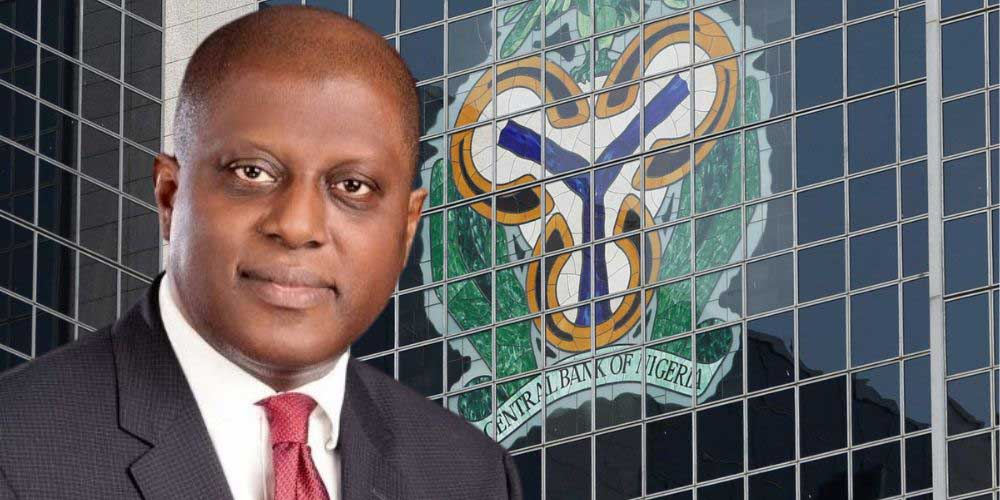
INVESTORS TRACK YIELDS AS CBN OFFERS N1.15TN IN TREASURY BILLS
The Central Bank of Nigeria (CBN) is set to conduct its second Treasury bills auction for January 2026 on Wednesday, offering instruments worth N1.15 trillion. The auction comes as strong liquidity in the banking system coincides with growing government borrowing needs and cautious expectations for interest rates.
The auction will cover the three standard maturities of 91 days, 182 days, and 364 days, continuing the apex bank’s reliance on short-term domestic instruments to fund government operations and manage liquidity.
Market participants will closely watch the results for signals on the direction of short-term interest rates, particularly amid mixed inflation trends and ongoing monetary tightening.
Data from the offer circular show that N150 billion has been allocated to the 91-day bills, N200 billion to the 182-day tenor, while the bulk of the offering, N800 billion, is earmarked for the one-year bills. Analysts note that this structure reflects persistent investor preference for longer-dated securities, which provide relatively higher yields in an uncertain rate environment.
The dominance of the 364-day bills highlights both the government’s funding strategy and investors’ desire to secure returns amid uncertainty over inflation sustainability and future policy direction. Recent auctions have consistently recorded stronger demand for longer-tenor bills, even as the central bank works to mop up excess liquidity.
Despite easing inflation in recent months, spot rates are widely expected to remain firm or edge higher. Analysts point to concerns over potential inflation reversals, exchange rate pressures, and the CBN’s preference for maintaining tight financial conditions. In December, the stop rate on the 91-day bills rose to 15.80 per cent from 15.50 per cent, while the 182-day tenor increased to 16.50 per cent from 15.95 per cent. One-year bills were sold at 18.47 per cent, up from 17.51 per cent, reinforcing expectations of elevated yields across the curve.
Earlier rate hikes at Treasury bill auctions, even amid easing headline inflation in November, signaled caution regarding the durability of disinflation trends and the need to support exchange rate stability.
Activity in the secondary Treasury bills market has remained subdued, alternating between calm and bearish sessions despite ample liquidity. Most maturities closed flat as investors adopted a wait-and-see stance ahead of the primary auction and recent Open Market Operations (OMO) sales. Only the April 9, 2026, and January 7, 2027, papers recorded notable yield movements, rising by 58 basis points and 12 basis points respectively, while other tenors remained unchanged. Dealers say this reflects selective positioning rather than broad-based selling pressure.
Earlier, the CBN allotted N2.64 trillion across 203-day and 245-day OMO papers at stop rates of 19.38 per cent and 19.39 per cent. Following the allotment, average Treasury bill yields edged up to 18.14 per cent, reflecting negative sentiment driven by sell-offs in the secondary market.
At the first Treasury bills auction of 2026, the government raised N1.14 trillion at higher stop rates across all maturities. In the January 7 auction, N108.17 billion was raised for the 91-day bills, N48.23 billion for the 182-day tenor, and N987.78 billion for the 364-day bills, as investors repriced risk-free assets, particularly at the long end of the curve.
Yields eased slightly in the secondary market afterward, with the average yield on one-year bills declining to about 18.10 per cent, supported by renewed demand for naira-denominated government assets. Longer-dated bills due in January 2027 attracted stronger interest, pushing yields down to around 17.51 per cent.
Analysts project a mild upward bias in yields at the upcoming auction. Matilda Adefalujo, fixed income analyst at Meristem Stockbrokers, said, “We expect stop rates to hover around current levels, with a mild upward bias at the long end of the curve, given the frontloading of government borrowings.” She added that maturing bills worth N725.19 billion this week are significantly lower than the N1.15 trillion on offer, reinforcing funding pressures.
“We expect the government to keep rates relatively attractive to sustain investor participation. In addition, the levels at which one-year bills are trading in the secondary market around 17.50 per cent should prompt investors to demand higher rates at the auction,” Adefalujo said.
Nigeria’s 2026 fiscal year carries a projected deficit of N23.85 trillion, with the Federal Government relying heavily on domestic borrowing. The Treasury bills issuance calendar for Q1 2026 indicates planned borrowing of N7.55 trillion, a factor analysts say could keep yields elevated.
Olaolu Boboye, lead economist at CardinalStone, said yields on one-year Treasury bills could range between 18.0 per cent and 20.0 per cent. “Overall, we advise fund managers to focus on the short to mid segment of the curve, especially in the first half of 2026,” he added.
Demand at recent auctions has remained strong, with total subscriptions exceeding N1 trillion since December 2025. At the last auction, investors offered N1.54 trillion, with N1.38 trillion directed at the 364-day bills, while the 91-day and 182-day bills attracted significantly lower interest. Analysts attribute the rising participation to investors positioning to benefit from higher yields amid a tightening rate environment.
Meanwhile, the domestic debt market is preparing for a sizable bond maturity, with the Federal Government expected to repay about N1.03 trillion in bonds on January 22, 2026. Analysts at FMDA Research noted that nearly 40 per cent of the maturities are concentrated in the 12.50 per cent FGN January 2026 bond. “Market participants should closely monitor the reinvestment pattern, as the size and concentration of inflows could elevate FX demand and put short-term pressure on the naira,” the firm said.
Data from the Debt Management Office shows that the N1.03 trillion repayment in 2026 represents the highest bond maturity payout in recent years, compared with about N558 billion in 2024 and N430 billion in 2025, highlighting the rising cost of public debt.
The repayments come amid Nigeria’s expanding debt stock. According to the Medium-Term Expenditure Framework for 2026–2028, the Federal Government plans to borrow N17.89 trillion in 2026 to fund a widening budget deficit as revenue projections fall below expenditure needs.
The Debt Management Office’s offer documents indicate that the January 2026 bond auction will feature three reopened Federal Government of Nigeria bonds with a combined size of N900 billion, marking a 100 per cent year-on-year increase in the January offering.