


INTERNATIONAL
MIDDLE EAST WAR POSES GRAVE RISK TO GLOBAL ECONOMY – UN CHIEF
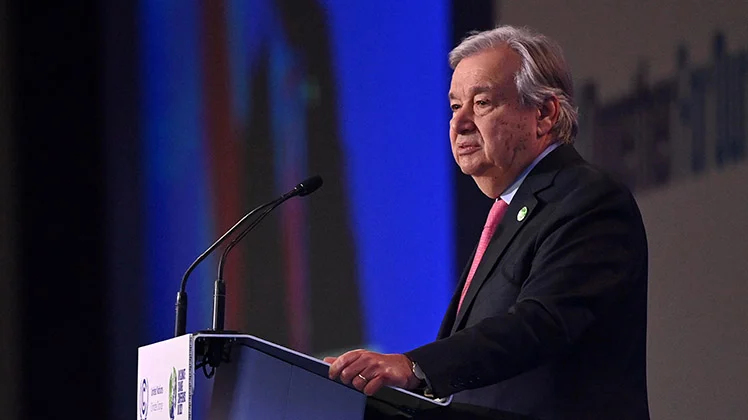
The Secretary-General of the United Nations, António Guterres, has warned that the escalating conflict in the Middle East could spiral beyond control and threaten the global economy.
In a statement released on Friday, Guterres said the ongoing fighting between the United States and Israel on one side and Iran on the other was already inflicting severe harm on civilians and could have far-reaching global consequences.
“All the unlawful attacks in the Middle East and beyond are causing tremendous suffering and harm to civilians throughout the region and pose a grave risk to the global economy, particularly to the most vulnerable people,” he said.
He warned that the crisis could escalate further if hostilities continue.
“The situation could spiral beyond anyone’s control. It is time to stop the fighting and get to serious diplomatic negotiations. The stakes could not be higher,” he added.
Senior UN humanitarian officials also warned that the conflict could trigger global ripple effects. The UN Emergency Relief Coordinator, Tom Fletcher, told reporters at UN headquarters in New York that the world was entering “a moment of grave peril” as the crisis deepens.
Fletcher cautioned that disruptions to key maritime routes could push up food prices, strain health systems, and complicate humanitarian operations worldwide.
The war has already affected global shipping, particularly in the Strait of Hormuz, a strategic sea lane connecting the Persian Gulf to global markets through which about 20 per cent of the world’s oil passes.
The Secretary-General of the International Maritime Organization, Arsenio Dominguez, said the waterway had effectively become unsafe due to the threat of strikes.
He disclosed that about 3,000 vessels and roughly 20,000 seafarers were currently stranded in the region and warned that the disruption could have major global knock-on effects.
Meanwhile, Iran’s ambassador to the UN, Amir Iravani, said Iran did not seek further escalation but would defend its sovereignty.