


BUSINESS &ECOMONY
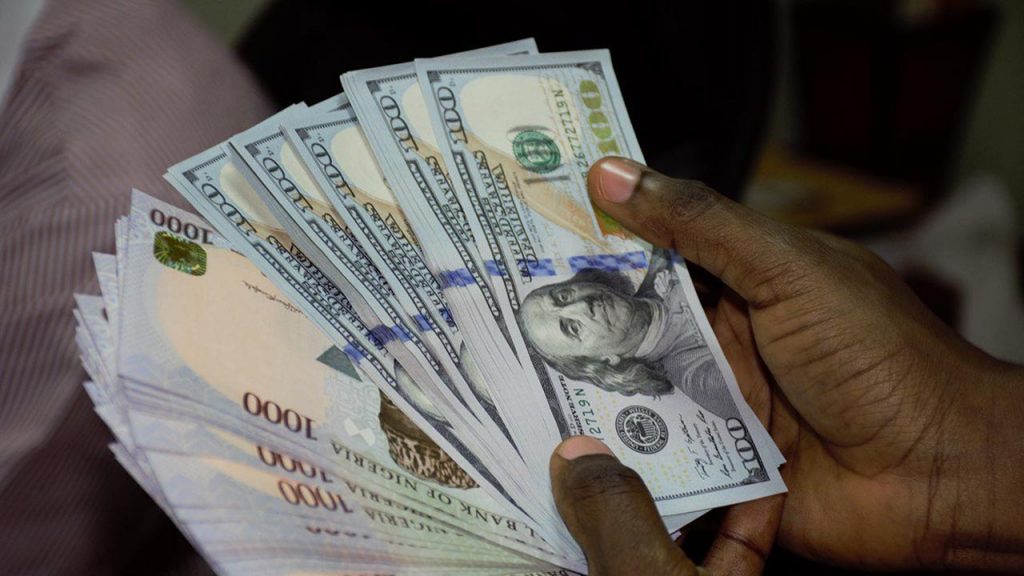
NAIRA APPRECIATES TO 1,446.74 PER DOLLAR AS CAPITAL INFLOWS REACH $20.98BN
The naira posted a stronger performance last week, rising to 1,446.74/$, representing a 0.69% increase from the previous week’s 1,456.72/$. This improvement follows a period of notable volatility. During most of the week, the naira traded below 1,450/$ at the official window, while the parallel market saw a slight dip of 0.07% to N1,476 per dollar.
At the 60th Annual Bankers’ Dinner in Lagos on Friday, Central Bank of Nigeria (CBN) Governor Olayemi Cardoso reported that foreign capital inflows totaled $20.98bn in the first ten months of 2025. This marks a 70% increase over the total inflows for 2024 and a 428% surge compared with $3.9bn recorded in 2023.
Cowry Asset Management’s weekly report noted that while there was no sharp spike in inflows, the market displayed “deeper, more balanced two-way interest. Liquidity improved, bid–offer spreads narrowed, and the market settled into a more stable pricing corridor. The MPC’s reaffirmation of the willing-buyer-willing-seller framework also helped anchor expectations, signalling that FX pricing will remain largely market-driven with minimal direct intervention.”
Analysts at AIICO Capital attributed the naira’s performance to Foreign Portfolio Investors’ activities and the CBN’s supply interventions. They said, “The Nigerian naira appreciated by N9.98 per USD during the week, supported by improved foreign currency supply from Foreign Portfolio Investors who sold USD positions, boosting liquidity and easing demand pressures. The steady inflow of foreign funds strengthened supply conditions, resulting in a consistent appreciation of the naira as USD availability outpaced demand. Overall, the naira gained 0.69% w/w to close at N1,446.74/$.”
Looking ahead, Cowry Asset Management projected that the naira could face mild pressure due to persistent FX demand and structural market imbalances. However, rising external reserves and expected month-end inflows should provide support. “The calmer post-MPC environment reduces uncertainty and allows price discovery to be guided by genuine market dynamics rather than reactive sentiment,” the report added.
Governor Cardoso also highlighted reforms in the foreign exchange market. He said, “Perhaps the most visible sign of renewed confidence in our economy is the transformation of the foreign exchange market. Over the past year, we have unified multiple exchange-rate windows, fully cleared the multi-billion-dollar FX backlog, and restored credibility, giving businesses confidence to plan.
“The Nigerian Foreign Exchange Code has established clear rules for transparency, ethics, governance, and fair dealing among authorised dealers, while the Electronic Foreign Exchange Management System powered by Bloomberg BMatch has enhanced FX trading through mandatory order submission, real-time regulatory oversight, and improved price discovery.”
Cardoso noted that these reforms have reduced market opacity and manipulation while restoring discipline. “The naira now trades within a narrow, stable range. The gap between official and parallel markets has shrunk to under two percent, down from over 60%. Foreign capital inflows of $20.98bn in the first ten months of 2025 reflect a resurgence in investor confidence,” he added.