


POLITICS &POLICY
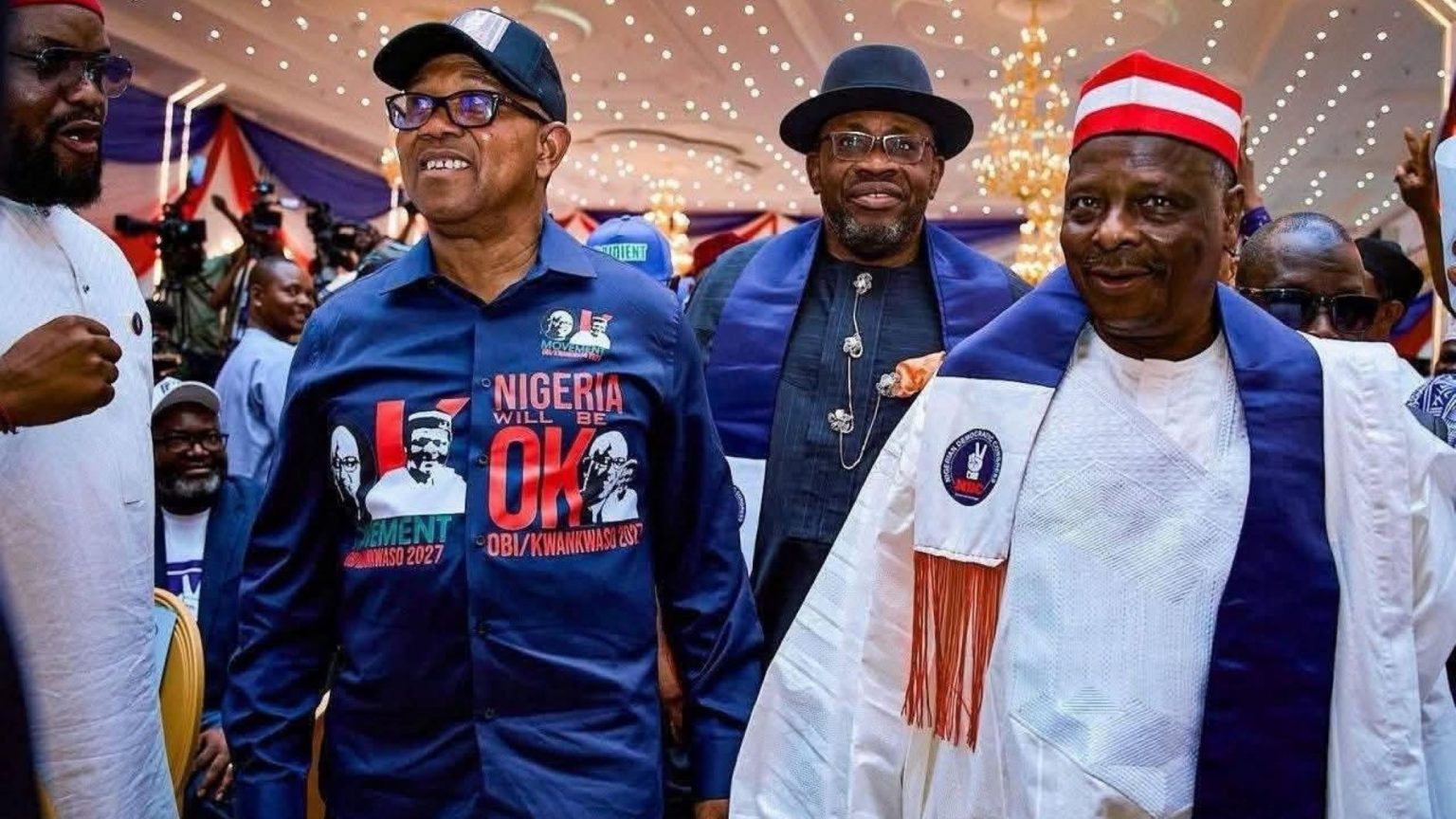
NDC UNVEILS 2027 CAMPAIGN COUNCIL AS DICKSON, OBI, KWANKWASO LEAD
The National Democratic Congress (NDC) has unveiled its campaign council for the 2027 general election, naming prominent political figures, including Senator Seriake Dickson, Peter Obi and Rabiu Musa Kwankwaso, to lead its preparations for the upcoming electoral contest.
The announcement marks a significant step in the party’s efforts to establish its campaign structure, coordinate political activities and mobilise supporters ahead of the 2027 elections.
Dickson, the party’s national leader, was named chairman of the National Campaign Council, while Obi, the party’s presidential candidate, will serve as co-chairman. Kwankwaso was appointed co-vice-chairman, placing three influential political figures at the centre of the party’s campaign leadership.
The appointments are expected to bring together political experience, regional networks and grassroots support as the NDC seeks to strengthen its position in the contest for national leadership.
Obi, a former governor of Anambra State and the Labour Party’s presidential candidate in the 2023 election, attracted significant support during the last presidential poll, particularly among young voters and urban residents. His participation in the NDC campaign is expected to remain a major focus as the party seeks to build on that support.
Kwankwaso, a former governor of Kano State and presidential candidate of the New Nigeria Peoples Party in 2023, also brings an established political network, particularly in the North. His involvement could be important to the party’s efforts to expand its reach beyond the South-East and South-South.
Dickson, a former governor of Bayelsa State, is expected to provide political leadership and help coordinate the campaign council’s activities as the party prepares for a demanding national election.
The campaign council will be responsible for coordinating mobilisation, developing campaign strategies and engaging stakeholders across the country. Its effectiveness will depend on how well the party harmonises the interests of its leaders and builds a coherent message around its presidential candidate.
The emergence of the council comes as political parties and movements intensify preparations for 2027, with economic hardship, unemployment, insecurity and the cost of living expected to feature prominently in campaign discussions.
The NDC will face the challenge of translating its leadership appointments into a strong nationwide political structure capable of competing with established parties. Its ability to mobilise voters, present credible policy alternatives and maintain unity among its leading figures could prove decisive in determining its electoral prospects.
As preparations continue, attention will turn to the party’s manifesto, candidate selection process and grassroots mobilisation efforts as it seeks to position itself as a major contender in the 2027 general election.