


NEWS XTRA
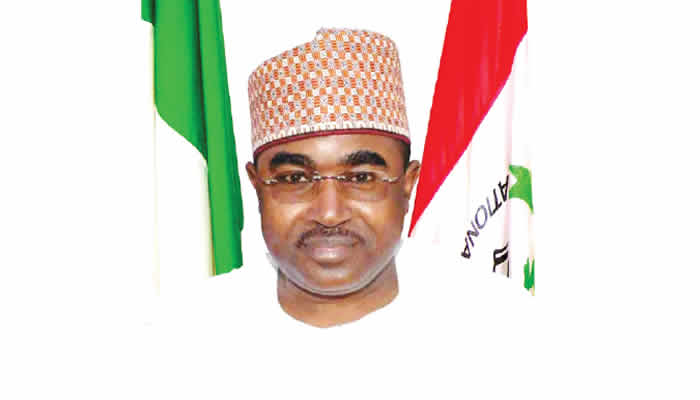
NDLEA WARNS OF RISING DRUG THREAT, UNVEILS NEW CONTROL PLAN
The Chairman of the National Drug Law Enforcement Agency, Buba Marwa, has warned that despite progress recorded in recent years, Nigeria still faces a growing and evolving drug abuse and trafficking crisis.
Marwa made the remarks on Monday during the opening of a two-day National Drug Control Master Plan Consultative Forum organised by the agency in Abuja.
He said projections by the United Nations Office on Drugs and Crime indicated that drug use across Africa could rise by 40 per cent by 2030, while West Africa continues to serve as a major transit corridor for cocaine trafficking between Latin America and Europe.
According to him, Nigeria’s drug landscape is becoming more complex due to increasing abuse of synthetic drugs, prescription medications, poly-drug use, and New Psychoactive Substances.
He also raised concerns over the growing use of encrypted digital platforms and dark-web operations in the illicit drug trade.
“As Africa’s most populous nation and largest economy, Nigeria cannot afford to be a passive observer. The risks to our youth, our workforce, and our national security are too high,” Marwa said.
He explained that the consultative forum was aimed at finalising the Zero Draft of the National Drug Control Master Plan for 2026–2030, which he described as a strategic roadmap for the next five years.
According to him, the new plan introduces two additional pillars focused on alternative development and sustainable livelihoods, as well as disrupting the illicit drug economy through financial intelligence.
“This forum is therefore our battle room for the next five years,” he stated.
Marwa acknowledged the support of local and international partners, particularly the United Nations Office on Drugs and Crime and ECOWAS, in developing the new master plan.
He urged participants to see the drug problem as a direct threat affecting families, schools, and communities across the country.
“We are here not just as policy-makers and experts, but as parents, citizens, and guardians of the next generation,” he added.
The NDLEA chairman encouraged stakeholders to challenge existing approaches and propose innovative solutions capable of improving Nigeria’s anti-drug response over the next half-decade.
In his goodwill message, the Country Representative of the UNODC, Cheikh Toure, called for stronger community participation in Nigeria’s drug control efforts.
Toure said effective responses to drug abuse and trafficking could not be driven solely from the federal level.
He urged state and local governments to take ownership of drug control programmes by allocating funding, integrating anti-drug measures into development plans, and ensuring intervention services reach grassroots communities.
“State and local governments must take ownership of the response by providing funding, integrating drug control priorities into development plans, and ensuring services reach grassroots communities,” he said.
He also stressed the importance of youth and gender inclusion in drug control policies, noting that women and young people remain highly vulnerable but are also key to prevention and rehabilitation efforts.
The Minister of State for Education, Suwaiba Ahmad, also commended the NDLEA for its commitment to tackling drug abuse and illicit trafficking through advocacy, enforcement, rehabilitation, and stakeholder engagement.
She said a successful national drug control strategy must involve education, healthcare, law enforcement, community participation, and social support systems working together.
“As we work collectively to develop a robust and responsive National Drug Control Master Plan, it is important that we adopt a holistic and multi-sectoral approach,” she said.
Ahmad urged participants at the forum to contribute practical recommendations that would strengthen Nigeria’s drug control framework and ensure long-term impact.