


NEW AUSTRALIAN RESEARCH OFFERS HOPE FOR RARE BLOOD CANCER PATIENTS
Australian researchers have identified a promising new, highly targeted approach to treating myelofibrosis, a rare and life-threatening blood cancer, raising fresh hopes for patients who currently rely largely on symptom-management therapies.
Scientists from the South Australian Health and Medical Research Institute, SA Pathology, and the University of Adelaide say the breakthrough centres on an immunotherapy-based strategy that directly targets the abnormal blood cells responsible for driving the disease, rather than merely easing its effects.
The findings were published on Monday, January 12, 2026, in Blood, one of the world’s leading international journals in haematology.
Myelofibrosis is a chronic blood cancer in which scar tissue gradually replaces healthy bone marrow, disrupting the body’s ability to produce normal blood cells. Patients often suffer from severe anaemia, frequent infections, abnormal bleeding, an enlarged spleen and liver, chronic fatigue, and unintended weight loss. While current treatments can reduce symptoms and improve quality of life, they do not eliminate the diseased cells at the root of the condition.
According to the researchers, the new approach marks a significant shift away from symptom control toward disease-modifying treatment.
The study was outlined in a statement published on the SAHMRI website on Monday titled “New targeted treatment offers hope for people with myelofibrosis.”
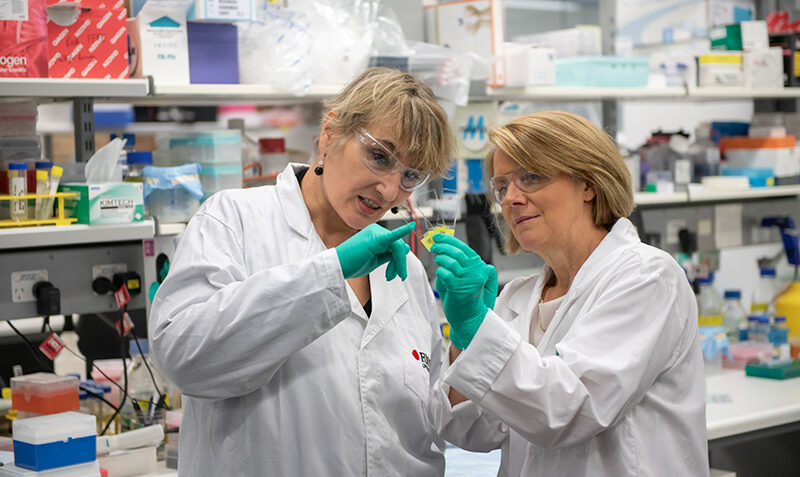
The research was co-led by Professor Daniel Thomas, Director of SAHMRI’s Blood Cancer Program, and Professor Angel Lopez, Head of Human Immunology at SA Pathology. Key contributions were also made by Dr Denis Tvorogov of the University of Adelaide and Cancer Council SA research fellow Dr Chloe Thompson-Peach.
Professor Thomas said the findings represent a major scientific advance and a potential world-first, revealing that Type 1 and Type 2 calreticulin mutations—common genetic drivers of myelofibrosis—respond differently to treatment.
“People with myelofibrosis are often treated with therapies that help control symptoms, but they don’t selectively target the abnormal cells driving the disease,” Thomas said.
“Our research shows that by focusing on what makes these cells different from normal cells, it may be possible to develop treatments that are both more effective and more precise. This represents a major paradigm shift in the treatment of myelofibrosis and related blood diseases.”
The research team identified two distinct molecular targets that can be exploited by the immune system to remove the disease-causing cells. A crucial part of the discovery involved analysing patient samples donated for research and stored at the South Australian Cancer Research Biobank, supported by the Health Services Charitable Gifts Board.
The study underscores the growing potential of precision immunology, an emerging field that aims to train the immune system to recognise and destroy cancer cells with exceptional accuracy, while largely sparing healthy tissue.
Professor Lopez said the work reflects a broader transformation in cancer research toward personalised medicine.
“The future of cancer treatment lies in understanding disease at a molecular and immune level and then translating that knowledge into therapies that are potent, long-lasting, and precise,” he said.
He added that tailoring treatments to the specific biological features of different forms of myelofibrosis could significantly improve outcomes for patients.
The researchers cautioned that, while the results are encouraging, the treatment approach is still at an early stage. Further laboratory studies, safety testing, and clinical development will be required before it can be tested in human patients.
Cancer researchers will now focus on advancing the findings toward clinical trials, with the long-term goal of developing safer and more effective therapies that can directly target the cause of myelofibrosis, rather than simply managing its symptoms.
If successful, the approach could represent a major step forward for patients living with the rare blood cancer and potentially pave the way for similar treatments in other related blood disorders.