


POLITICS
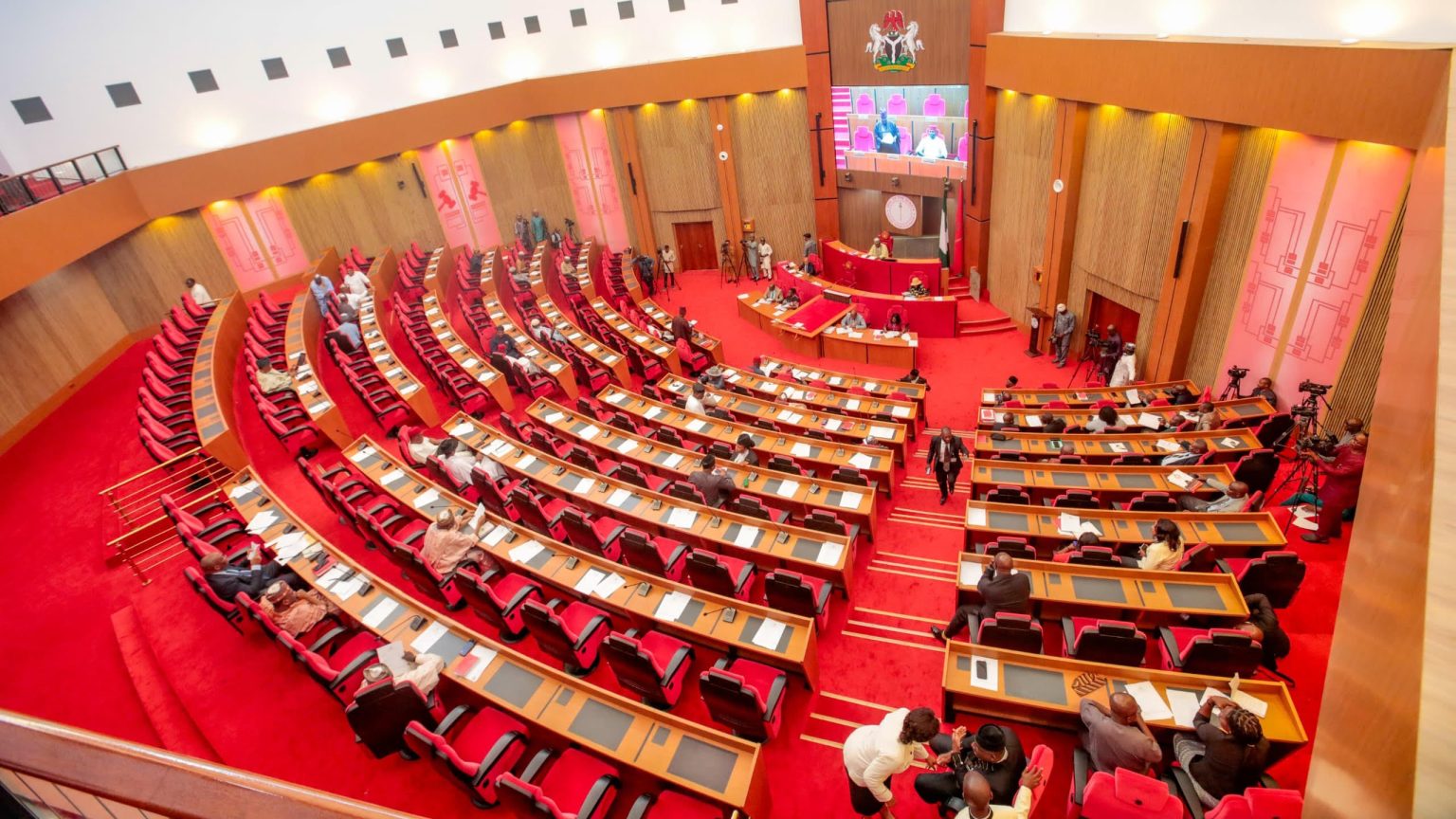
NEW SENATE RULES TRIGGER POLITICAL BATTLE OVER 2027 LEADERSHIP RACE
A major political chess game appears to be unfolding inside Nigeria’s Senate following controversial amendments to the chamber’s standing rules, changes that could significantly influence who gets to lead the next National Assembly after 2027.
While the amendment was officially presented as a procedural reform, many insiders believe it is deeply tied to political strategy and future power calculations.
At the centre of the unfolding drama are Senate President Godswill Akpabio, Imo State Governor Hope Uzodimma, Imo West Senator Osita Izunaso, and former Edo governor Adams Oshiomhole.
The controversy began after the Senate revised its eligibility rules for top leadership positions.
Under the new arrangement, only senators with at least eight years of uninterrupted service in the Senate can now contest for the offices of Senate President and Deputy Senate President.
The amendment also tightened requirements for other influential positions such as Senate Leader, Chief Whip, and Minority Leader, restricting eligibility to senators who have completed at least two consecutive terms.
On paper, the changes appear to favour experience and continuity.
But politically, the impact is much bigger.
The amendment effectively blocks many high-profile politicians expected to return to the Senate in 2027 from immediately contesting leadership positions, including powerful figures like Uzodimma, former Delta governor Ifeanyi Okowa, and former Deputy Senate
President Ovie Omo-Agege.
And that’s where the real intrigue begins.
According to reports, some insiders see the amendment as a “pre-emptive strike” aimed particularly at Hope Uzodimma, who is widely believed to be considering a return to the Senate after completing his tenure as governor.
Political signals from Imo State seem to support that theory.
Recently, APC stakeholders from Imo West reportedly purchased senatorial nomination forms for Uzodimma and endorsed him as their preferred candidate for the district.
But there’s a complication.
Because Imo operates on an off-cycle governorship calendar, Uzodimma’s tenure is expected to end in January 2028, months after the next National Assembly is scheduled to be inaugurated in June 2027.
That timing has reportedly led to discussions around possible political workarounds.
One option allegedly being considered is the use of a placeholder candidate, a loyal ally who would temporarily occupy the Senate seat before stepping aside once Uzodimma leaves office.
Another reported possibility is an early resignation that would allow his deputy to complete the remaining months of his tenure.
Either scenario would significantly affect the political future of current senator Osita Izunaso, whose own ambitions could be disrupted by Uzodimma’s return.
Still, despite all these calculations, the revised Senate rules may have already closed the door on Uzodimma’s potential path to the Senate Presidency.
And interestingly, during deliberations on the amendment, reports suggest that the strongest resistance came from Adams Oshiomhole, another politician whose future ambitions may also be limited by the new requirements.
What makes this development important is that it reveals how political battles are often fought long before elections begin.
Sometimes, the biggest fights are not during campaigns, but during rule-making.
Because in politics, changing the rules can shape the outcome before the contest even starts.
As 2027 slowly approaches, the Senate amendment has already sparked deeper conversations about power, succession, and political survival within Nigeria’s ruling elite.
And for many observers, one thing is becoming increasingly clear: this was never just about parliamentary procedure.