


NEWS XTRA
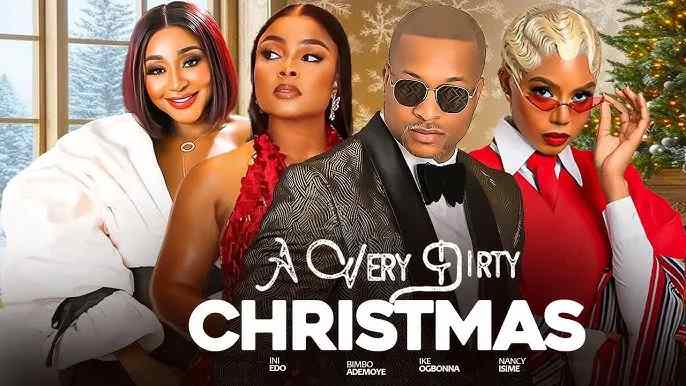
NFVCB DEFENDS ‘A VERY DIRTY CHRISTMAS’ TITLE, MOVES TO ADDRESS PUBLIC CONCERNS
The National Film and Video Censors Board has defended its decision to approve the Nollywood film A Very Dirty Christmas, saying the title was carefully reviewed and found not to be an attack on the Christian faith or the Christmas celebration.
The clarification followed a wave of backlash from Christian groups who described the film’s title as offensive and disrespectful to the religious significance of Christmas, which commemorates the birth of Jesus Christ.
In a series of posts shared on Wednesday, the Executive Director of the NFVCB, Dr Shaibu Husseini, explained that the board approved the film after assessing both its content and creative intent.
According to him, regulators interpreted the title in a metaphorical sense rather than a literal one.
Husseini said the phrase “A Very Dirty Christmas” was understood as a reflection of human behaviour, moral contradictions, and social realities that unfold during the festive season, not as a description or desecration of Christmas as a sacred Christian event. He stressed that the board considers narrative context and intent, rather than isolated words, when exercising its regulatory responsibilities.
He further stated that the film does not mock, trivialise or depict the nativity, Christian worship, or any core Christian doctrine. According to him, there are no scenes, dialogues, or images in the movie that ridicule the birth of Jesus Christ or Christian beliefs.
Despite defending the approval, the NFVCB acknowledged the concerns raised by Christian bodies and members of the public. Husseini disclosed that the board has since engaged the film’s producers and requested a modification or stylisation of the title to reduce public sensitivity and prevent misunderstanding, while still preserving the creative integrity of the work.
He noted that such post-approval adjustments are not unusual in the global film industry, citing past international examples where movie titles were altered after public complaints. He added that the board’s actions were guided by the provisions of the NFVCB Act and aimed at maintaining social harmony and avoiding religious tension.
According to Husseini, discussions with the producers are ongoing, and the filmmakers have shown a willingness to cooperate. He expressed confidence that the eventual outcome would balance creative freedom with respect for public sentiment and religious diversity.
The controversy erupted after promotional materials for A Very Dirty Christmas, produced by actress Ini Edo, began circulating. The Christian Association of Nigeria and other Christian groups criticised the title, arguing that associating Christmas with the word “dirty” undermines the holiness of the celebration. They called for an apology from the producers and urged regulators to reconsider the film’s approval.
In response, the producers maintained that the title is symbolic and reflects the moral conflicts and family tensions explored in the storyline, rather than serving as a commentary on Christianity.
While the film continues to screen in cinemas across the country, the debate over its title has reignited discussions about artistic expression, religious sensitivity, and the role of regulators in balancing both in Nigeria’s creative industry.