


NATIONAL NEWS
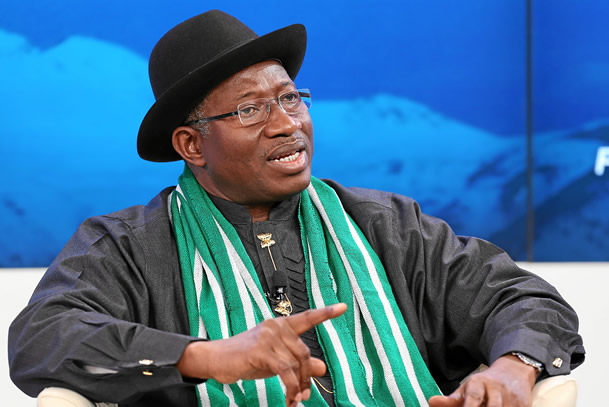
NIGER DELTA SUFFERING CLOSELY LINKED TO PERSONAL INTERESTS — JONATHAN
Former President Goodluck Jonathan has attributed the Niger Delta’s underdevelopment to weak political will and the personal ambitions of some political leaders.
Speaking in Abuja on Friday at the launch of The Hidden Treasures, a 202-page book by former Delta State governorship aspirant Chris Iyovwaye, Jonathan said political rivalry and the scramble for power have repeatedly stalled progress in the region.
Ex-presidential candidate Adewole Adebayo and former Minister of Information Prof. Jerry Gana also highlighted the failure to act on long-standing regional plans as a key challenge to development. Jonathan, who chaired the event, was represented by his Chief of Staff, Mike Oghiadomhe.
Recalling abandoned regional economic initiatives, Jonathan stressed that personal ambition often overshadowed collective interest. “A lot has been said in the past and even now. But without action, potential remains untapped. Deep inside here, we can have tonnes of gold, diamonds, and uranium. But it will remain zero until they are mined and utilized,” he said.
He noted that past attempts to coordinate South-South governors and federal lawmakers often stalled due to competition for power. “At one point, everybody in the Niger Delta wanted to be the vice president to an unknown president. That was because Obasanjo was president from the South, and the next president was to come from the North,” he added.
Jonathan expressed hope that the revived South-South governors’ commission could drive change, emphasizing that only “practical action backed by political will” can restore the region’s growth prospects. He urged the creation of a mechanism to detail investment opportunities, attract resources, and develop the region physically.
“The Niger Delta is supposed to be Nigeria’s economic hub, with the potential to host the country’s largest seaport. From here, you can reach every part of Nigeria, especially the Middle Belt and the North. It is time to harness our resources for sustainable development,” Jonathan said.
Adebayo described the Niger Delta as a “vast, mismanaged economic paradise” whose wealth far outweighs the poverty of its people. He stressed that visionary leadership is needed to prevent resources from being exploited solely for personal gain.
“The wealth here is 18 times more than all the productivity of the United States from 1776 to date,” he noted, calling for a return to responsible leadership and visionary governance.
Gana, who helped conceptualize the Niger Delta Development Commission (NDDC) in 1999, lamented that the commission has fallen short of its founding goals. “The vision was to transform the Niger Delta into one of Nigeria’s most developed regions, with world-class infrastructure. Yet, current efforts focus on minor projects rather than large-scale development,” he said, urging current managers to deliver meaningful impact.
The Niger Delta, Nigeria’s main oil-producing region, has long suffered environmental degradation, unemployment, poverty, and infrastructural neglect, despite contributing the majority of the nation’s revenue. Oil spills, gas flaring, and weak regulatory enforcement have devastated livelihoods, while recurring conflicts over resource control have deepened instability.
Established in 2000, the NDDC was intended to drive large-scale infrastructure development and address regional gaps but has been plagued by mismanagement, corruption, abandoned projects, and political interference. Multiple audits have highlighted weak accountability, poor project delivery, and fund diversion, leaving the region’s core problems largely unresolved.