


AVIATION
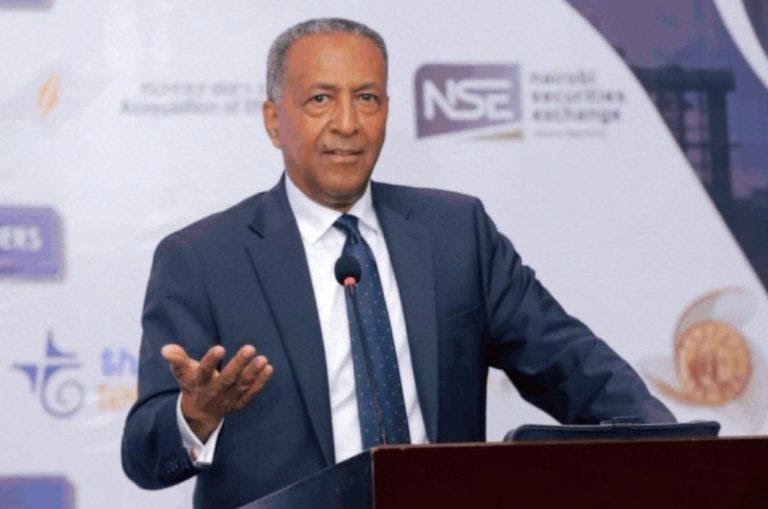
NIGERIA'S AIRLINE OWNERSHIP MODEL HOLDING BACK AVIATION GROWTH — NEGATU
Global Chairman of Fairfax Africa Fund, a United States-based investment company, Mr. Zemedeneh Negatu, has attributed the slow growth of Nigeria's aviation industry to the ownership structure of domestic airlines, arguing that the sector's reliance on sole proprietorship is unsustainable and out of step with global best practices.
Negatu made the observation on Tuesday, stressing that the current model has hindered the emergence of financially strong and globally competitive Nigerian carriers capable of driving long-term growth in the aviation sector.
According to him, successful aviation markets across the world are dominated by airlines backed by institutional investors, public shareholders, pension funds, and other corporate investors, rather than businesses owned and controlled by a single individual.
He noted that Nigeria's airline industry has remained largely fragmented, with many operators struggling under the weight of inadequate capital, limited fleet capacity, rising operational costs and poor access to long-term financing.
"The ownership structure of Nigerian airlines is one of the major obstacles to the growth of the sector. A model based on sole proprietorship is not sustainable and is inconsistent with what obtains in successful aviation markets around the world," he said.
Negatu explained that the capital-intensive nature of the aviation industry requires operators with strong financial backing capable of acquiring modern aircraft, expanding route networks, maintaining high safety standards and weathering economic shocks.
He argued that airlines dependent on a single owner often face funding constraints that limit expansion and make them vulnerable to fluctuations in foreign exchange, rising aviation fuel prices, aircraft maintenance costs and other operational challenges.
The aviation expert called for a shift towards corporate ownership structures that would attract private equity firms, institutional investors and capital market funding, thereby strengthening the financial capacity of domestic airlines.
He also advocated strategic mergers, partnerships and consolidation among Nigerian carriers, noting that stronger and better-capitalised airlines would be more competitive within Africa and internationally.
According to him, a more robust ownership model would enable Nigerian airlines to take greater advantage of opportunities created by the African Continental Free Trade Area (AfCFTA) and the Single African Air Transport Market (SAATM), both of which are aimed at boosting regional trade and air connectivity.
Negatu further urged the Federal Government to implement policies that encourage investment in the aviation industry, improve infrastructure and provide a stable regulatory environment capable of attracting both local and foreign investors.
Industry stakeholders have long maintained that Nigeria possesses one of Africa's largest aviation markets, driven by its large population and strategic geographic location.
However, the sector continues to grapple with numerous challenges, including high operating costs, multiple taxation, foreign exchange scarcity, expensive aviation fuel, inadequate airport infrastructure and limited access to affordable financing.
Analysts believe that addressing these structural challenges, alongside reforms in airline ownership and corporate governance, could significantly improve the financial sustainability of domestic carriers and position Nigeria as a major aviation hub on the African continent.
Negatu maintained that transforming the ownership structure of Nigerian airlines is essential to unlocking the industry's full potential, attracting long-term investment and accelerating the growth of the country's aviation sector.