


EDUCATION
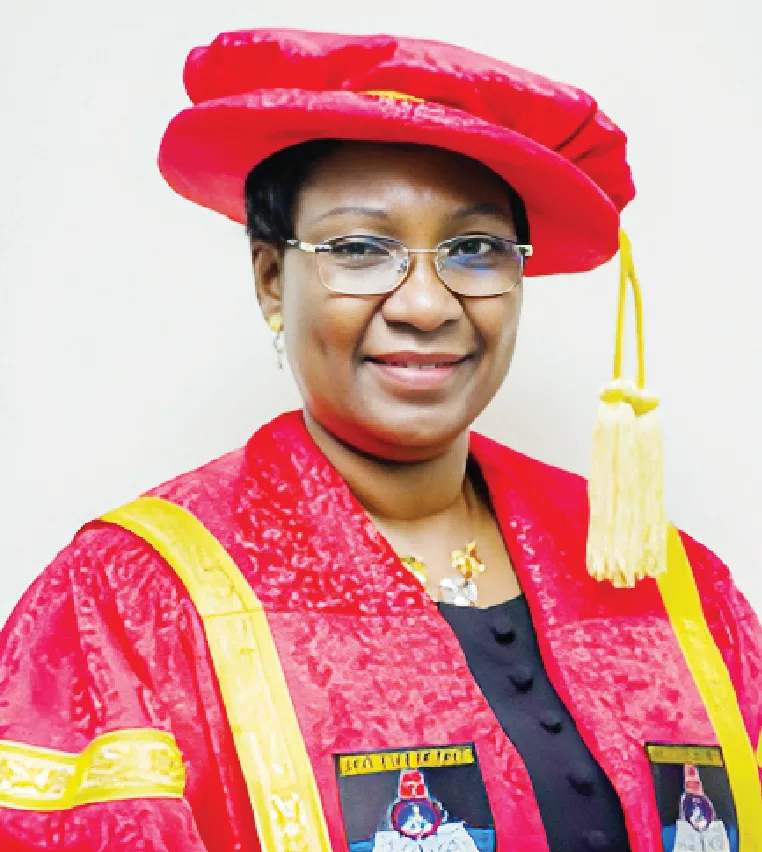
PUBLIC VARSITIES NEED N1M SCHOOL FEES FOR FINANCIAL INDEPENDENCE – EX-LASU VC
The immediate past Vice-Chancellor of Lagos State University, Prof. Ibiyemi Olatunji-Bello, has said public universities would need to charge at least N1m per student annually to achieve financial independence.
Olatunji-Bello, who completed her five-year tenure as LASU’s ninth Vice-Chancellor on September 19, 2026, made the disclosure in an interview discussing her administration’s achievements, challenges and plans for the university.
She explained that although LASU’s Internally Generated Revenue increased from N3bn to N13bn during her tenure, the amount was still insufficient to cover the university’s running costs.
According to her, LASU’s monthly wage bill had risen above N1bn, while the university also spent about N140m every month on electricity.
She added that the institution still had to provide funds for cleaning, security, diesel, maintenance and other day-to-day expenses.
Olatunji-Bello said LASU also needed to augment its salary payments by about N240m every month, making it difficult for the institution to operate independently without government support.
She argued that universities could not maintain high academic standards without adequate funding, noting that some secondary schools already charged more than N1m per term while public universities charged significantly less annually.
She said universities could increase their internally generated revenue through innovation, digital services, consultancy, postgraduate programmes, partnerships and other legitimate ventures.
During her tenure, she said LASU introduced new programmes, expanded digital services and added more than 75 postgraduate programmes, which contributed to the increase in revenue.
She said digitalisation of university processes, from admission and screening to certificate collection, also generated additional income.
Olatunji-Bello disclosed that LASU’s student population was about 85,000, including postgraduate and part-time students, although only about 12,000 students were on campus at any given time.
The university currently accommodates about 8,000 students through its own hostels and facilities operated through public-private partnerships.
She acknowledged that the available accommodation was insufficient for the student population and said priority was given to students on a first-come, first-served basis.
Reflecting on her tenure, Olatunji-Bello identified the 2024 students’ protest over payment for Computer-Based Test facilities as her lowest point in office.
She said the university initially proposed that each student pay N10,000 after it became necessary to settle the CBT centre, but students rejected the charge.
According to her, the proposed fee was later reduced to N5,000 and then N3,000, but the students still refused to accept it.
She eventually withdrew the charge and directed that the affected examination be conducted using pen and paper.
Olatunji-Bello said her administration’s highest point came in 2025 when the Joint Admissions and Matriculation Board declared LASU the most subscribed university by UTME candidates in Nigeria.
She said the university maintained the position in 2026 and received N25m for maintaining compliance with JAMB regulations.
She attributed the high demand for admission into LASU to its merit-based admission process, saying 70 per cent of admissions were based on merit, while other categories covered catchment areas and direct entry.
The former VC also highlighted research and innovation as major achievements of her administration.
She said LASU established a N5m competitive internal research grant for academic staff, while seven members of staff secured more than N29m in grants from the Lagos State Research and Innovation Council between 2022 and 2025.
She also disclosed that the university secured a N3bn TETFund Centre of Excellence in 2026, describing it as the only one in the South-West.
According to her, LASU also developed an artificial intelligence policy approved by its Senate, with guidelines for the ethical use and citation of AI-generated materials.
Olatunji-Bello said the university had also strengthened its plagiarism and research ethics systems to ensure that academic work remained original and properly documented.
She identified the construction of a large Central Research Laboratory as one of the major projects she could not complete during her tenure.
She appealed to the Lagos State Government to prioritise the completion of the university’s Innovation Hub and other outstanding buildings.
On her goal of making LASU the best university in West Africa, Olatunji-Bello said the institution achieved the feat in the UI GreenMetric World University Rankings for sustainability and maintained the position from 2022 through 2026.
She added that LASU also sustained its position in sub-Saharan Africa and was later given the vice-chairmanship of the UI GreenMetric World Ranking.