


BUSINESS
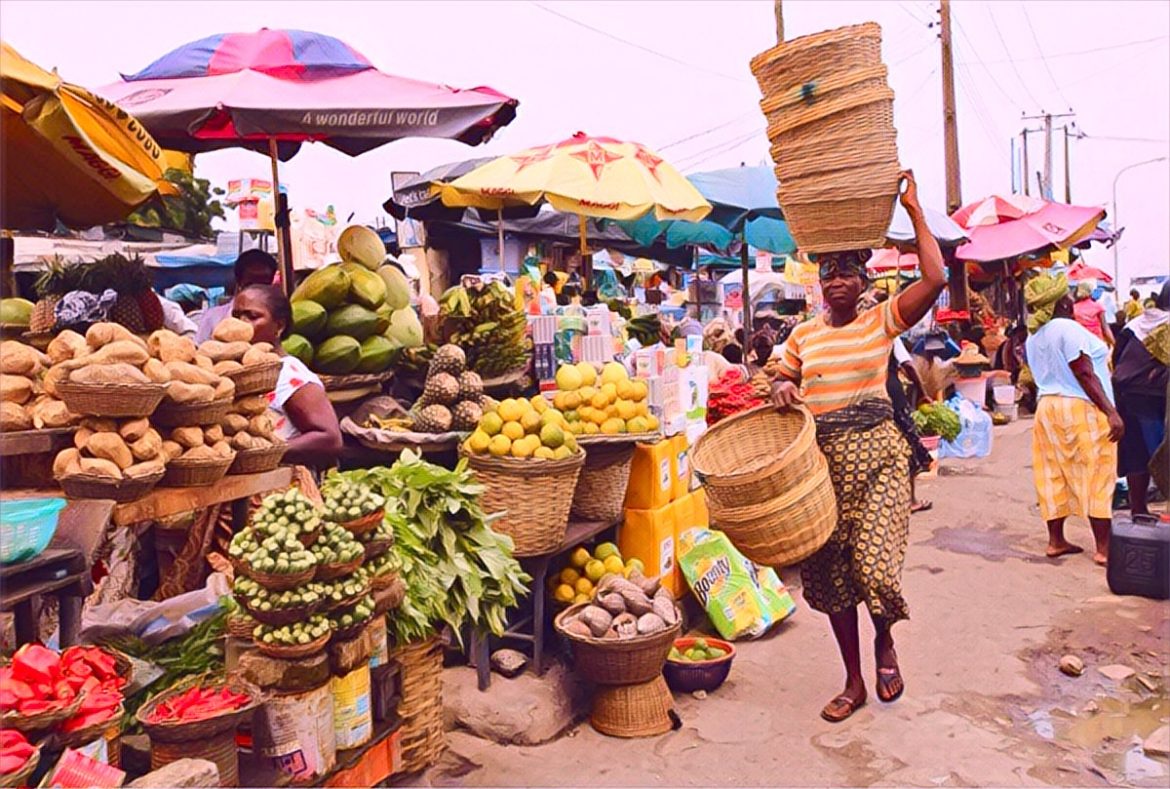
RISING FOOD AND FUEL PRICES DEEPEN COST OF LIVING CRISIS IN NIGERIA
Nigerians are facing increasing economic pressure as food inflation rises alongside soaring fuel and energy costs.
This development coincides with President Bola Ahmed Tinubu’s visit to the United Kingdom on the invitation of King Charles III on Tuesday.
According to the latest Consumer Price Index report released by the National Bureau of Statistics, food inflation climbed to 12.12 percent in February 2026, up from 8.89 percent recorded in January.
The agency attributed the month-on-month increase to rising prices of staple food items, including beans, carrots, okazi leaf, cassava, crayfish, millet flour, yam flour, snails, dried ogbono, and cowpeas.
Despite the rise in food costs, headline inflation recorded a marginal decline of 0.04 percentage points to 15.06 percent in February, compared to 15.10 percent in January. However, on a monthly basis, price pressures intensified, with inflation rising to 2.01 percent in February from -2.88 percent in January.
Fuel Prices Surge Nationwide
The increase in food inflation comes amid a sharp rise in fuel prices across the country. Petrol prices have climbed to as high as ₦1,330 per litre, up from the ₦875–₦900 range recorded before the escalation of tensions linked to the Iran–United States–Israel conflict escalation on February 28, 2026.
At the same time, the Dangote Refinery raised its gantry petrol price for the fourth time to ₦1,175 per litre, driven by global crude oil prices exceeding $100 per barrel.
This increase has triggered a ripple effect across retail outlets, with filling stations adjusting pump prices upward. As a result, petrol is now sold between ₦1,261 and ₦1,330 per litre nationwide, contributing to a surge in transportation costs over the past two weeks.
Experts Cite Seasonal and Structural Factors
Economist Ayo Teriba explained that the rise in food prices may partly reflect seasonal economic patterns, noting that prices often dip in January before increasing in February as economic activity resumes.
He emphasized that the current trend may not necessarily indicate a sustained inflationary surge but could represent short-term fluctuations. According to him, it remains too early to determine whether the increase marks the beginning of a new inflationary cycle or a temporary deviation from previous trends.
Teriba also pointed to inconsistencies in inflation data, noting that earlier revisions by the statistical agency have raised concerns about data reliability. He suggested that clearer trends may emerge in the coming months.
Households See Little Relief
Similarly, Godwin Oyedokun stated that the slight drop in headline inflation offers little practical relief to households.
He explained that the marginal decline is largely statistical and does not significantly ease the financial burden on Nigerians, as the overall cost of living remains high.
Oyedokun highlighted the rise in food inflation as particularly troubling, given that food accounts for a large share of household spending, especially among low- and middle-income earners. According to him, increasing food prices continue to erode purchasing power and worsen poverty levels.
He attributed the rise in food costs to structural challenges such as high energy prices, increased transportation expenses, insecurity in agricultural regions, and supply chain inefficiencies.
These factors, he noted, reflect cost-push inflation, where higher production and distribution costs are passed on to consumers.
Call for Policy Action
Oyedokun called for urgent policy measures to address the root causes of food inflation. He stressed the need for improved security in farming areas, increased investment in agricultural infrastructure, and better storage and transportation systems to reduce post-harvest losses.
He also recommended targeted support for energy and logistics within the agricultural sector, alongside broader economic reforms focused on improving household welfare, employment, and food accessibility.
While the slight decline in headline inflation may suggest some level of stability, the continued rise in food prices highlights the ongoing economic challenges faced by many Nigerians and underscores the need for more effective policy interventions.