


POLITICS
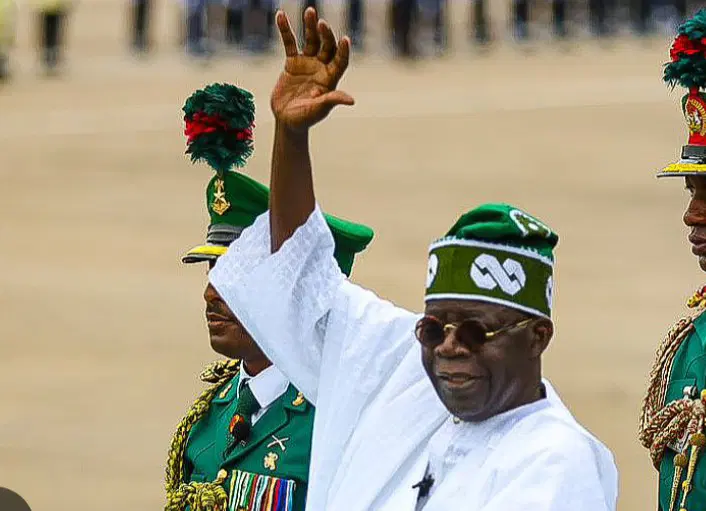
TINUBU SAYS NIGERIA WILL SPEND $11.6BN ON DEBT SERVICING IN 2026, CALLS FOR GLOBAL FINANCIAL REFORM
President Bola Tinubu has disclosed that Nigeria will spend about $11.6 billion on debt servicing in 2026, a figure he says represents nearly half of the country’s projected revenue for the year.
The President made the remark on Tuesday while leading Nigeria’s delegation comprising government officials, diplomats, and private sector leaders to the Africa Forward Summit held at the Kenyatta International Convention Centre in Nairobi, Kenya.
According to a statement by presidential spokesperson Bayo Onanuga, Tinubu used the platform to highlight the growing pressure debt servicing places on Nigeria’s fiscal capacity and broader development goals.
He warned that every dollar spent on repaying high-interest loans represents resources that could have been invested in critical sectors such as manufacturing, agriculture, technology, and human capital development.
“Every single dollar that leaves our treasury to pay punitive interest rates is a dollar that did not go into our steel sector, our textile mills, our agro-processing plants, or our digital industries,” he said.
The President argued that Africa’s industrial growth is being constrained by what he described as an unfavourable global financial structure that treats African economies as high-risk borrowers, regardless of domestic reforms or economic performance.
He questioned how African manufacturers could compete globally when borrowing costs across the continent remain significantly higher than in developed economies, stressing that the current system limits industrialisation and cross-border value chains under the African Continental Free Trade Area.
Tinubu further described the existing international financial framework as one that effectively weakens Africa’s industrial capacity, calling for urgent reforms to enable the continent to move from raw material exports to value-added production.
He insisted that Nigeria is not seeking financial aid but rather a fair system that allows African nations to industrialise, process their own resources, and compete on equal terms in global markets.
On Nigeria’s broader economic direction, the President reiterated that the country will continue to borrow responsibly while demanding that credit assessments reflect real economic fundamentals and long-term growth potential.
Tinubu also used the summit to push for stronger African integration, particularly in maritime security and blue economy development.
He highlighted Nigeria’s Deep Blue Project and proposed its expansion into a regional maritime intelligence hub for Gulf of Guinea countries, aimed at improving security, coordination, and data sharing across African waters.
According to him, secure seas and stable maritime governance are essential for attracting investment and unlocking Africa’s blue economy potential.
“Let no one misunderstand: maritime sovereignty does not repel investment — it attracts it,” he said, adding that Nigeria is committed to advancing climate-aligned port development and digital transformation in the maritime sector.
The President further called for Africa to transition from “sea blindness” to full ocean governance, describing it as a critical step for economic transformation on the continent.
On migration, Tinubu said addressing the root causes of irregular movement must remain a priority, stressing that people are less likely to migrate under unsafe conditions when opportunities exist at home.
He linked Nigeria’s migration strategy to ongoing reforms in subsidy removal, financial restructuring, and agricultural modernisation, while urging international partners to increase investment in job creation, climate adaptation, and digital skills development.
Tinubu also called for stronger African involvement in shaping global migration policies, noting that existing international frameworks remain limited due to their non-binding nature.
The summit, co-hosted by French President Emmanuel Macron and Kenyan President William Ruto, brought together leaders from over 30 countries, alongside representatives from the United Nations and African Union.
High-level discussions focused on investment, artificial intelligence, digital transformation, agriculture, climate change, and strategies to translate policy commitments into industrial growth across Africa.
On the sidelines of the event, Tinubu held bilateral meetings with several leaders, including Madagascar’s President Michael Randrianirina and Confederation of African Football (CAF) President Patrice Motsepe, where he reaffirmed Nigeria’s readiness to host the 2026 CAF Awards.
He was accompanied by top government officials and prominent private sector figures, including Aliko Dangote, Tony Elumelu, Abdulsamad Rabiu, and Aigboje Aig-Imoukhuede.