


BREAKING NEWS
U.S. HAILS NIGERIAN FOR RAISING $7M TO LAUNCH HAIR-BRAIDING ROBOTICS
Nigerian-American entrepreneur Yinka Ogunbiyi successfully closes a $7 million seed funding round. The capital is designated for the market rollout of HaloBraid, engineered to be the world’s first patented braid-assist mechanical technology.
The high-profile financing was spearheaded by Seven Seven Six, the prominent venture capital firm established by Reddit co-founder Alexis Ohanian.
Additional major capital contributions came from AlleyCorp and Bling Capital, signaling intense investor confidence in the commercial viability of automated personal care infrastructure. The startup enters its commercial phase backed by a massive consumer pipeline, featuring an active pre-order waiting list of over 7,000 professional hair salons.
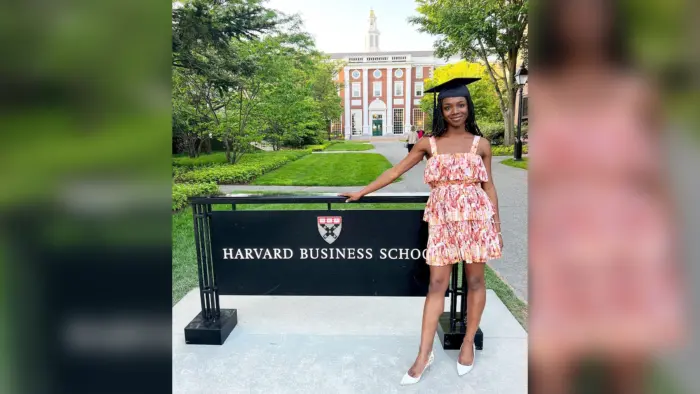
Ogunbiyi’s path to pioneering beauty-tech draws heavily on her dual academic and engineering background. Holding a joint Master of Science and Master of Business Administration degree from the Harvard Engineering School and Harvard Business School, her professional foundation includes developing connected smart home appliances and consumer electronics.
The concept for HaloBraid emerged during the COVID-19 pandemic when Ogunbiyi spent four grueling days manually installing her own protective knotless braids. Recognizing a glaring lack of technological intervention in a booming global industry, she partnered with co-founder David Afolabi to design an automated alternative.
Rather than pursuing full automation intended to replace human touch, HaloBraid functions as an intelligent collaborative assistant designed to support, rather than sideline, traditional braiders.
The robotic system targets the heavy, repetitive down-shaft weaving motions that typically occupy roughly 80 percent of a salon chair session.
Addressing critiques regarding whether automation might dilute the cultural essence of heritage hairstyling, Ogunbiyi maintained that the technology enhances the overall experience by eliminating physical drudgery.
She said, “I don’t think anything will get lost from the experience. If anything, it enriches it. Technology simply assists with the repetitive movements that consume the most time and place the greatest strain on the body.”
Under the operational framework, the human hairstylist remains an indispensable element of the appointment. The professional initiates the styling process by manually parting the scalp, sectioning the hair strands, and weaving the primary anchor knot by hand to ensure precise edge tension and comfort. Once secured, the modular HaloBraid unit attaches to execute the repetitive mid-shaft braiding sequence, cutting standard salon appointment times in half. Upon completion, the human stylist unhooks the machine to finish, trim, and seal the ends according to the client’s explicit requests.
Aside from boosting daily salon turnover and revenue for independent business owners, the technology offers a vital solution to a widespread occupational health hazard. Decades of continuous manual tension and repetitive pulling leave thousands of professional braiders struggling with chronic arthritis, severe carpal tunnel syndrome, and debilitating back injuries.
By offloading the strenuous physical labor of the middle braiding process, the hardware aims to extend the working lifespan of professional stylists.
With industry data highlighting that nearly 95 percent of surveyed Black women would opt for protective styling more frequently if salon visits were not exhausting, full-day commitments, Ogunbiyi’s $7 million injection marks a transformative turning point for the modern beauty economy.